AI Job Tracker
Generative AI Project: Autonomous Agents for a Job Search
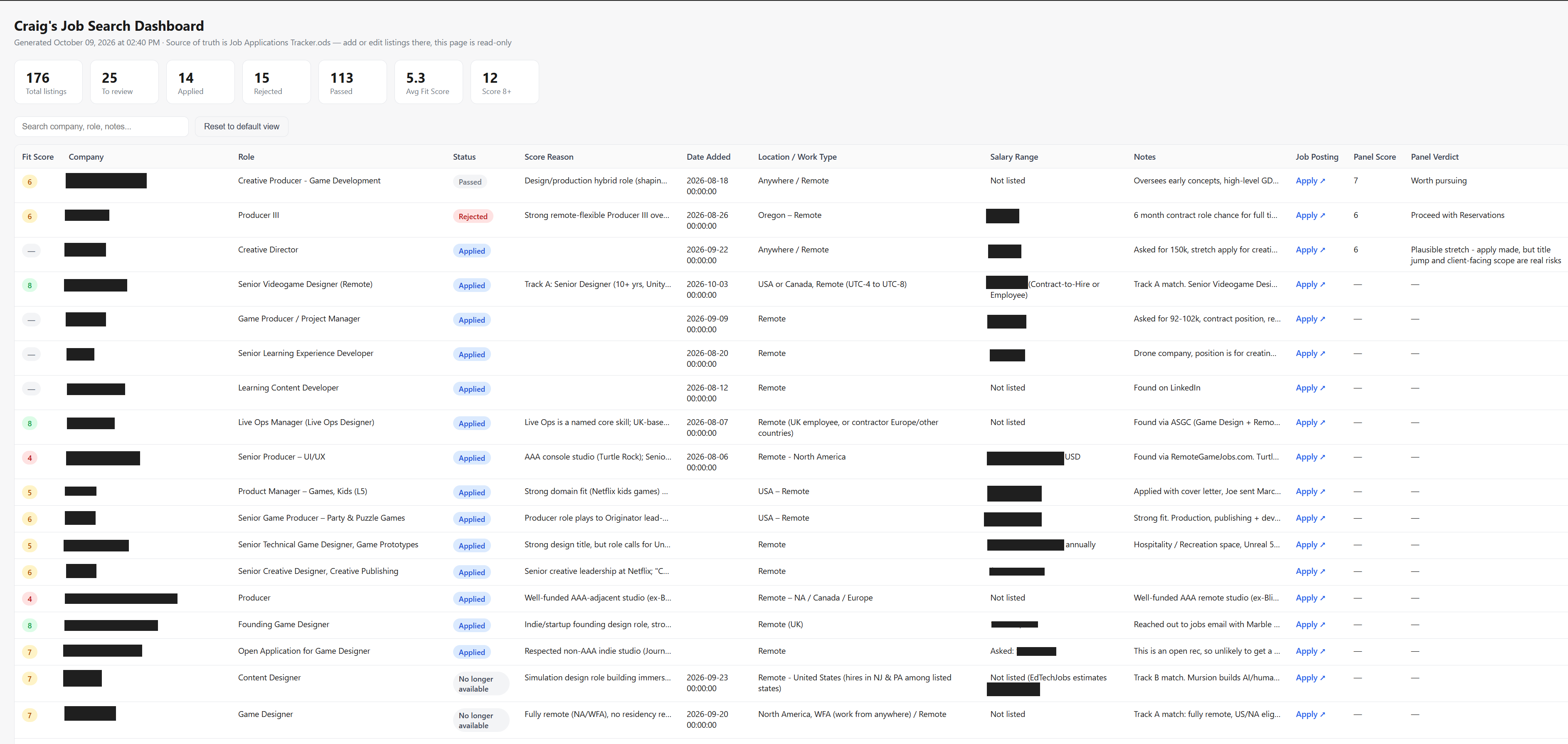
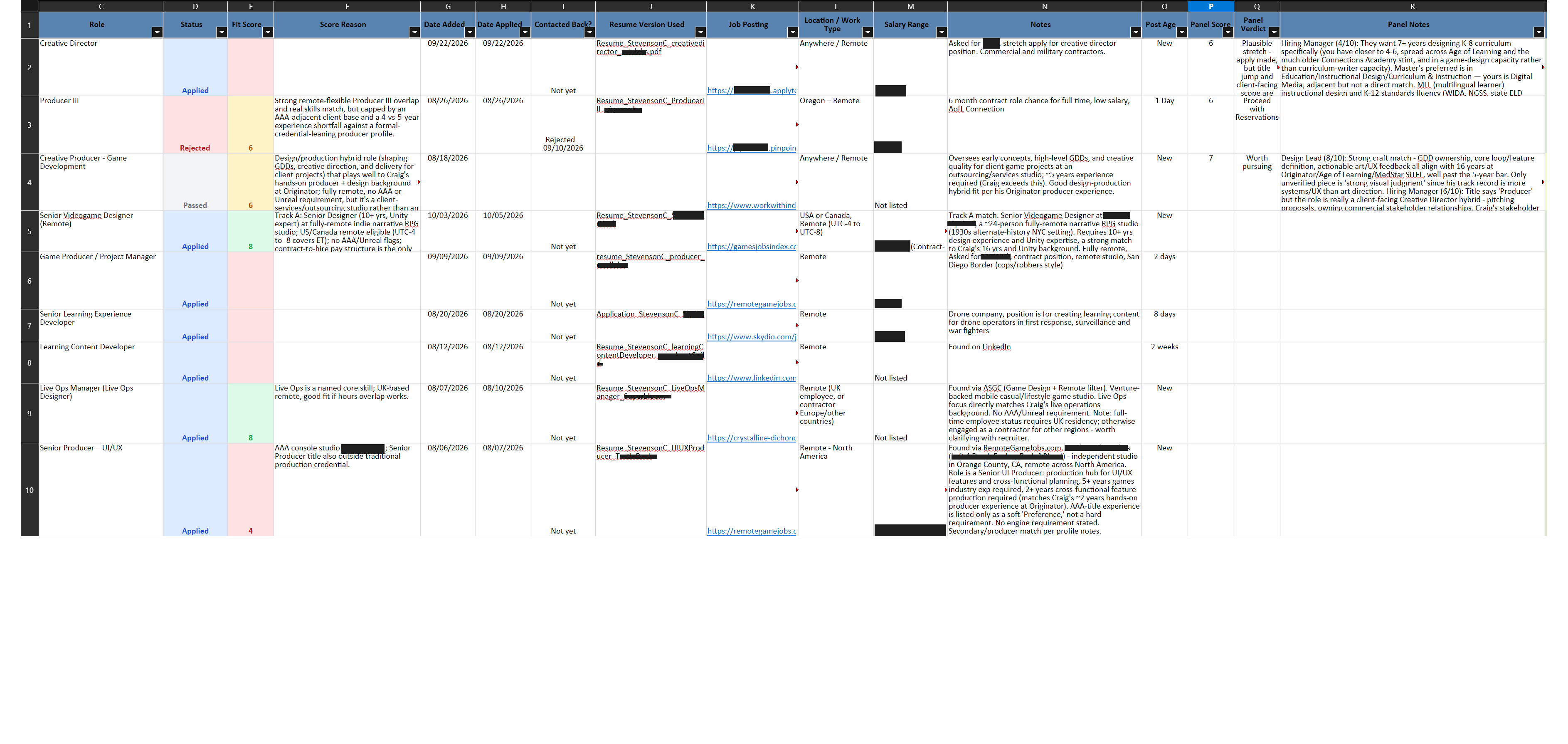
After a layoff ended my employment at my recent studio, searching for new opportunities became my full time job. With the game industry facing over 20,000 developers looking for work this year alone, the job market has become saturated with great talent with few opportunities. The manual process of searching job boards, preparing resumes and doing research became daunting to say the least. To make this process more efficient, I used Claude to create a Job Tracker database and dashboard tool. By utilizing Cowork and two separate recurring tasks, and a panel review board of agents, I was able to free up time to work on personal projects without missing out on great opportunities.
- My role
- Designer and operator. I wrote the agent instructions, defined the safety rules, and debugged failures as they appeared.
- Tools
- Cowork, Claude scheduled tasks, web fetch and browser tools, Claude subagents.
- Outputs
- A job tracker spreadsheet and an HTML dashboard
How It Works
- Two scheduled agents: I wrote the instructions for two autonomous agents that use web fetch and browser tools to find postings on a schedule.
- Dedupe against a live tracker: Each agent checks the existing tracker before adding anything, so the same job never appears twice.
- Safety checks before saving: Results are validated before they are written to the tracker.
- Graceful degradation: When a site, tool, or step breaks, the agents fall back and keep going instead of failing the whole run.
- A panel of review subagents: Each posting is reviewed from the perspective of a hiring manager, a design lead, and a recruiter, which helps me sort the results and decide which jobs to go after.
Challenges
- A sandbox outage: A Windows update broke the sandbox the agents relied on, so I had to work around the outage until it was resolved.
- Rate limits on client-rendered sites: Sites that render their content in the browser hit rate limits and returned empty pages to simple fetches, so the agents needed fallback behavior.
- A stubborn formatting bug: A corruption in the saved data kept reviving itself after Claude updated the tasks, and I had to track down why it kept coming back.
What I Learned
- Autonomous agents need guardrails first. Dedupe checks, validation before saving, and graceful failure handling mattered more than the cleverness of any single step.
- Plan for the environment to break. Outages, rate limits, and client-side rendering are normal, and the instructions have to say what to do when they happen.
- Several viewpoints beat one score. Reviewing each posting as a hiring manager, a design lead, and a recruiter surfaced things a single read would miss.
Screens